Showing posts with label Ranger. Show all posts

Thursday, January 2, 2025

Spell Lists Suck: Fiction-Focused Magic in D&D

I typically propose very minor alterations to D&D: how to fix summoning, how to fix shapechanging, how to fix weapon damage. I'm not really interested in redesigning the core system - just relatively simple fixes to pain points I've experienced in play. This time, I'm proposing something a little more drastic.

Spell lists suck. The way that spellcasters pick and choose the spells they learn and prepare is dumb.

Now that I've stated my thesis, I will walk it back slightly by saying spell lists are okay. Every spellcasting class has its own spell list that the player chooses from when deciding what spells their character learns or prepares each day. The unique spell lists for each spellcaster do a nice job differentiating the classes. Spellcasters either use "magic magic", "holy magic", or "nature magic", and two classes that use the same type are further differentiated by the specific spells available to them - warlocks have "creepy" spells compared to wizards, and paladins have more "battle magic" compared to clerics.

The existence of spell lists also allows for them to be subverted. Bards can, at certain levels, learn spells from any class's list. Clerics, druids, paladins, rangers, sorcerers, and warlocks get access to a handful of thematic bonus spells to pad out their lists. For some reason, druids, rangers, and sorcerers don't always get these bonus spells, warlocks don't automatically learn them but instead can choose to learn them, despite every other class getting them for free, and some classes draw their thematic spells from other class's spell lists while others get free access to spells they could have had anyway...but this is a tangent.

I say spell lists suck because every class gets their spells the same way: by picking the "good" ones off a big list. There are minor differences in that clerics, druids, and paladins get all of their spells at each level at once and prepare a limited number each day, while bards, rangers, sorcerers, and warlocks learn a limited number and always have them prepared. But the process by which clerics, druids, and paladins - or bards, rangers, sorcerers, and warlocks - actually choose their spells is exactly the same from one class to the other.

The flavor text for the classes suggests that each is either channeling a different type of magic or else channeling the same type of magic in a different way (wizards memorize and recite arcane formula, sorcerers draw on their innate power, and warlocks use magic gifted to them by otherworldly patrons), but this isn't reflected at all in how the caster acquires the actual spells they can cast.

The cleric might acquire a couple spells which are thematic to their god, but they are otherwise preparing the same spells as any other cleric. The sorcerer doesn't unlock some new power specific to their unique origin - they just learn the next most optimal generic sorcerer spell. The warlock does not commune and negotiate with their patron for enhanced powers - they just get another warlock spell, most of which are available to all warlocks.

No class is acquiring spells in a way that's at all related to the fiction, and because everyone is just picking spells off their own little menu, the classes are distinct from one another, but multiple characters within a single class are often not.

The exception is the wizard, who we're told learns magic by reading spellbooks and scrolls, which is actually how they learn magic in the game...sometimes. Because the designers feel they can't trust the DM to include spellbooks and scrolls in their game, wizards also just arbitrarily learn spells each time they level up. Like everyone else.

If I were to redesign the spellcasting system in a drastic way, I would design fiction-focused rules for how each spellcasting class acquires their spells. What would that look like?

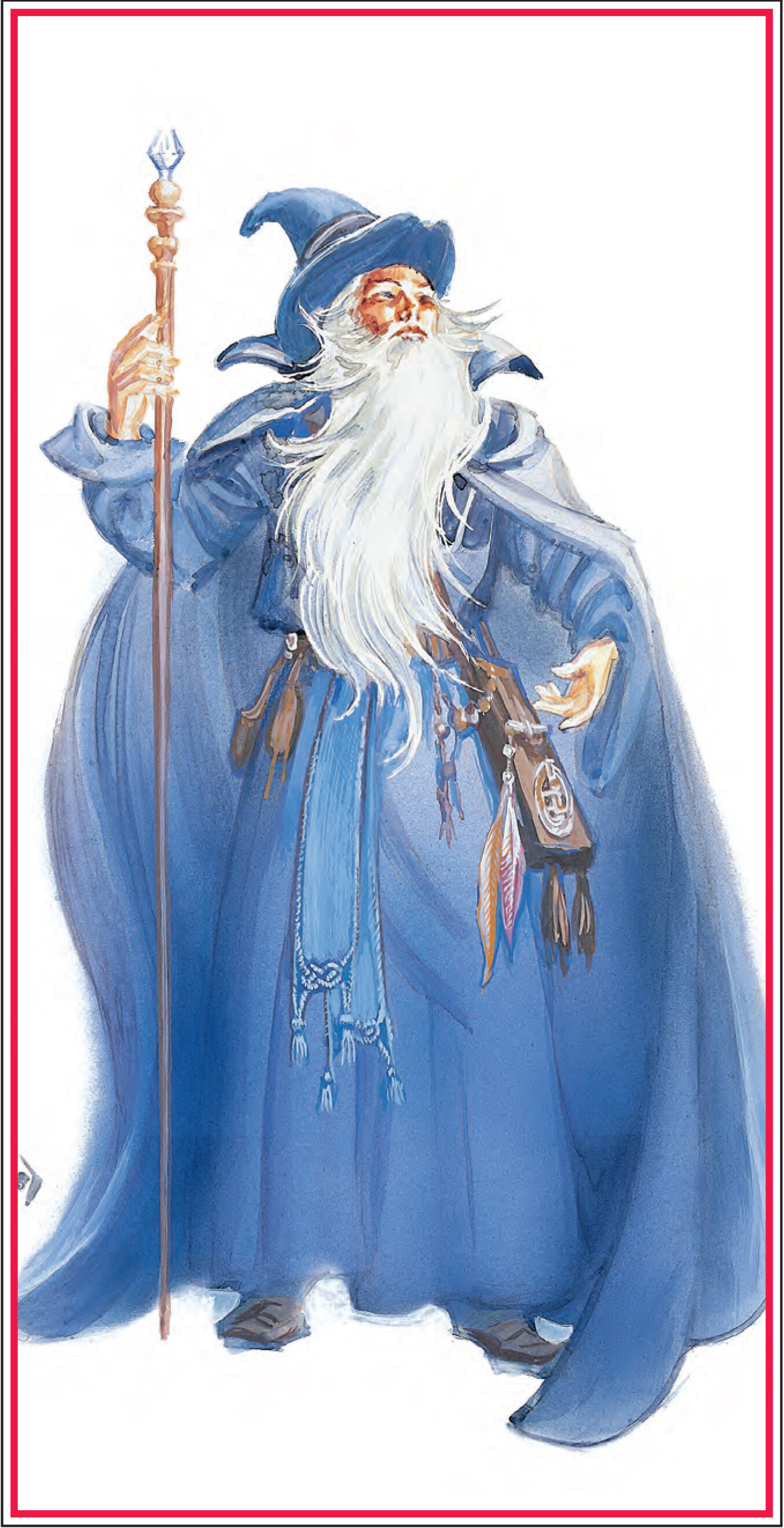
Wizards

It is a myth that wizards can only master "arcane" magic. All magic is arcane - even if the druids and the gods would like the world to believe otherwise.

In truth, wizards can learn any magic that is written down. The magic of the gods is written in prayer books and inscribed on altars and in reliquaries. The magic of nature is etched into ancient standing stones and trees. None of these are beyond the wizard's comprehension.

The process of learning a spell remains unchanged from the base rules - the wizard must spend a certain amount of time and money (representing the purchasing of magically primed rare inks and parchment), then succeed on an Intelligence (Arcana) check, the DC equaling 10 + the spell's level, in order to write the magic in their spellbook.

As in the base rules, the wizard begins their career with a spellbook containing six 1st-level spells. These spells are usually taught to them by their master, but could also be acquired and learned by chance. The DM chooses which spells they are. To encourage the wizard to adventure and discover new magic, their master should probably be dead or estranged. The adventurer wizard can always find a new master through politicking or networking.

I feel very strongly that the DM should choose the new wizard's starting spells, but I'm sure there are many who find this unconscionable. The DM and player could also negotiate what the the six spells are. Or, to simplify things, perhaps all novice wizards learn the same six spells: comprehend languages, detect magicmage armor, magic missile, shield, and sleep. A bit dull, but classic, and not at all useless.

Other subclasses which cast wizard spells (such as the arcane trickster and eldritch knight) also have spellbooks, and learn spells in the exact same manner as the wizard. Since this is a choice which is made later in the character's career, it's best for the player to declare their intention to take this option sooner rather than later, so that the DM can plan to include a spellbook which the character can acquire. Otherwise, a character who pursues this path does not have any spells until they can acquire a suitable spellbook (another wizard in the party can help them create one, or perhaps basic primers are sold in metropolitan markets).

One of the small things that bothers me about arcane tricksters and eldritch knights is that they learn the same magic as wizards but in an entirely different way. If wizards learn from books and can learn as many spells as they can find, other classes that cast wizard spells should do the same!

Clerics

Clerics do not learn spells - they are granted spells through faith and prayer. The deity and its intermediaries provide access to the magic. This is represented by a generic cleric spell list which is then supplemented with a selection of always-ready subclass-specific spells. This is fine, but it still results in largely similar clerics with just a few unique signature spells. Why is 90% of each god's repertoire the same spell list as every other god?

In AD&D, cleric spells like bless, cure wounds, and remove curse were reversible, and the reverse versions were the purview of evil clerics only. 2e sorted cleric spells into spheres of influence and introduced specialty priests (the druid being used as an example) which had their own unique powers as well as access to specific spheres. These two elements gave distinction to good and evil clerics as well as clerics of specific deities.

Each of 5e's Divine Domains should have a unique spell list, accessible only by worshiping a god who rules over that domain. This domains akin to 2e's spheres of influence. I wouldn't only split all of the current cleric spells into these domains, but would instead go through all of the spells in the game to determine which domains (if any) each might fit into.

There would also be a general domain for the most essential cleric spells like bless. These I would divide into good and evil domains. Want to cast cure wounds? Worship a good deity. Want to cast inflict wounds? Worship an evil deity.

This is probably a great time to mention that these are broad ideas. I'm taking big hypothetical swings here. A lot of these ideas might be kind of impractical, but things that I want to toy around with on a very small scale eventually (like, if a player in my game wanted to be a Life cleric, I might create a custom Life Domain spell list for them instead of creating spell lists for every domain).

From there, clerics could remain much the same, simply choosing their domain depending on their deity, except they would have access to a specific spell list based on that choice. A single god could grant access to multiple domains at once, or a cleric may have to choose which aspect of the god they worship - i.e., the destructive firepower of the god-phoenix, or the healing power symbolized by its rebirth?

It's worth nothing that D&D is typically a polytheistic setting. I don't see why a single cleric couldn't simultaneously petition multiple deities, so long as they aren't opposed to one another. A piety system such as that in Mythic Odysseys of Theros could be used to determine what level of magic from each deity the cleric has access to, depending on their in-game actions, allowing a cleric to essentially "multiclass" with a variety of gods to gain access to a breadth of magic which rivals the wizard.

Druid

Druid spellcasting in most editions of D&D works exactly the same as for clerics, albeit with different spells. If we're making a spell list for each cleric domain, one could simply give them access to the Nature Domain spell list and call it a day, but that would be a disservice. 

My understanding of druids is not that they are just clerics for gods of nature, but instead that they are channelers of D&D's ubiquitous "background magic" associated with "nature spirits". The druid is not praying to the nature god to cast earth magic, but channeling the powers of the local earth spirits.

Because druids channel the magic of the natural spirits in their environment to cast spells, just as clerics need a unique spell list for each Divine Domain, druids need a unique spell list for each natural environment - grassland, forest, hills, desert, swamp, water, mountain, underdark, etc. Like clerics, they would also have a more general list to include things which aren't environment-specific like animal spells, healing, and the like.

Can druids cast spells in unnatural environments like settlements and dungeons? Those places still have natural elements, so I don't see why not. A mining town is still in the hills, a mummy's tomb is still in the desert, and a merfolk stronghold is still underwater, after all.

In some cases, environmental elements need to be woven into the components of the druid's individual spells. That is, casting entangle requires the presence of plant life, and call lightning requires the druid to be outdoors during a storm, which could preclude the use of those spells in certain environments.

Should druids still be required to prepare spells? If they are channeling the natural spirits of their current environment, that sounds like spontaneous casting. Spellcasters who prepare their spells do so at the beginning of the day. In the morning the druid could be in the forest, but by afternoon they might be in the swamp. Should they be able to carry forest magic into the swamp with them?

Maybe they should. There is something interesting about a high-level druid who flies quickly to the desert, communes with it, and then flies quickly to the dark wood to use the desert's withering spells against the corrupted plant monsters there. It has Pokémon vibes (complimentary). Much to think about.

Paladin and Ranger

I'll skip to these two as they are straightforward. My solution for the two of them is simple: paladin spellcasting works the same as for clerics, and ranger spellcasting works the same as for druids.

In older editions, paladins and rangers were akin to variants of the fighter with higher ability score requirements and some special thematic powers. They weren't even spellcasters until much later in their career (in 2e, 9th-level for paladins and 8th-level for rangers), and their spellcasting abilities were quite weak at that time.

I won't advocate for returning to that style of doing things. The "half-caster" spell progression of 5e works just fine (at most, I'd consider making them a "one-third-caster" like the eldritch knight or arcane trickster). 

The point is that paladins are warriors who cast cleric spells, and rangers are warriors who cast druid spells. They don't need their own spell list or unique mechanics. They will benefit from the versatility that comes from the broader cleric and druid lists.

The elephant in the room is that this requires paladins to go back to worshipping gods. I like that in 5e, paladins draw their power from the magic of the oath they swear. It's very thematic, and it implies a setting where oaths carry cosmic weight. However, I have no idea how to make it fiction-focused with regards to what spells they can cast or how their magic works.

So, paladins have to worship gods again, which is fine by me. Like clerics, their spell list is determined by their deity's domain of influence. They should still have an oath with principles they must adhere to, but the oath is sworn between them and their deity, and the deity provides the magic so long as the paladin continues to abide. The chosen deity informs which oaths are available.

Bard

In 5e, the bard learns a set number of spells and casts them spontaneously. Their spell list is mostly arcane magic, but is also a weird grab bag of divine and nature magic. Their Magical Secrets feature allows them to pilfer spells from other class's spell lists. There's some flavor text about how the bard utilizes the "Words of Creation", which are learned from "hard study" and "natural talent", but of course this isn't actually reflected in how they learn their spells.

My bard is instead inspired by the bards of editions past.

The AD&D 1e bard is famously weird. It is essentially the first "prestige class" - part fighter, part thief, and part druid.

In 2e, the bard is largely similar, except the druid spells are replaced with wizard spells. Bards in 2e keep a spellbook.

To split the difference, the fiction-focused bard uses both the wizard's and druid's rules for spellcasting simultaneously. They have a spellbook and can learn any spell that's written down, and they can also channel the magic of nature spirits and cast druid spells spontaneously. It's up to the player to choose which slots to spend on which spells.

This preserves the main element which makes bards' spellcasting unique - the hodgepodge of spells they get from different types of casters. It also fully embraces two very different interpretations of the bard of which I'm equally fond.

Sorcerer and Warlock

I'm lumping these together because the post is getting long, I don't have a lot to say about them, and the systems I have in mind for them are very similar.

In 5e, both sorcerers and warlocks learn spells as they level up and can cast them spontaneously. Some sorcerer subclasses get bonus spells that they learn automatically. Every warlock subclass gets an expanded spell list, but they don't learn the spells automatically. They have to pick them as the spells they learn when they gain levels.

Fiction-focused sorcerers have a unique spell list determined by their Sorcerous Origin, and fiction-focused warlocks have a unique spell list determined by their Otherworldly Patron. Not every sorcerer regardless of their magical origin can cast control winds. Not every warlock patron has the power to grant their petitioners finger of death

This makes sorcerers and warlocks the most tightly-focused casters in the game, which they should be. It doesn't make sense to me that anyone with a magical soul/anyone who makes a pact with an otherworldly entity can cast from almost exactly the same list of spells.

Conclusion

So, that is a pretty crazy system I'm proposing. The 5e PHB has eight spell lists (one for each spellcasting class). If I were to follow my own advice and make all of the specific spell lists I'm proposing - only counting classes and subclasses in the PHB - I would end up with 20 unique spell lists (seven for the cleric domains, eight for each type of natural environment, two for the sorcerer subclasses, and three for the warlock subclasses - the bard, paladin, ranger, and wizard don't need their own lists).

It is incredibly obvious why the 5e design team did not do this. The unique spell list for each class plus signature spells for things like Divine Domain, Druid Circle, Sacred Oath, and the like is an elegant solution. 

But, I just can't shake the feeling that spellcasters who use different types of magic should feel different beyond just the flavor of their spells and what kind of armor they can wear. Clerics, druids, and paladins, bards, rangers, sorcerers, and warlocks should not be learning and using magic exactly the same way as one another.

Mostly, I want the spells that casters can access to make sense in the fiction. If the wizard is supposed to learn spells by finding them in dungeons while adventuring, they should not be stumbling upon 9th-level spells in the spellbook their master gifted them as an apprentice. Not all gods should grant access to the same magic. A druid who draws magic from the environment should not be casting the same spells in the desert as in the forest. A sorcerer or warlock with a very specific magical power source shouldn't have the same spell selection as every other sorcerer or warlock.

Well, it's easy enough for me to argue in favor of doing all this extra work without putting my money where my mouth is, so I totally understand if this sounds like a bonkers idea to anyone else. It sounds pretty bonkers to me. But in a kinda cool way.

Friday, May 10, 2024

On Hands (and how to use them)

Okay, weird post title. Bear with me.

This post was inspired by Warren D.'s post "WHAT'S INTERESTING ABOUT BASIC DUNGONEERING: And what is not" on the I Cast Light! blog. What got me thinking about hands specifically is Warren's thoughts on light and weapons (highlights mine):

Light: Due to torch cost and number per slot, it is easy to carry a lot of torches.

Not interesting: Carrying enough light to last 12-24 turns- easily done

Interesting: When torches extinguish-- like in the middle of a fight or when the goblins you are negotiating with get mad; how many hands in the party are occupied by torches

... 

Weapons: I've yet to find a really good way to do weapons simply outside of 1d6 damage for all types. I don't mind BX's variable weapon damage. And I do like some old rulesets sorta "first strike" if your weapon is larger than an opponents other wise smaller, lighter weapons strike first in subsequent arounds.

So here is what I have got so far: Using a weapon two-handed is a +1 to damage, using an off-hand weapon is +1 to-hit, and a shield is of course +1 AC. I do like that fighters with bows can shoot twice if they did not move and the "cleave" ability.

Not interesting: Weapon factors that are so extensive they require a separate rules discussion, trigger player obsession, and/or orient the whole of gameplay to combat

Interesting: What PCs chose to do with their hands: more armor, more weapons, or more light

What I'm interested in is how player characters choose to use their hands. It's a simple thing, but it's important - a hand can do any of the following things:

  • Cast a spell with material or somatic components
  • Hold a torch or lantern (providing light with which to see)
  • Increase weapon damage (per my rules for variable weapon damage, using two hands increases a weapon's damage die size by one) 
  • Increase a weapon's reach (most weapons with the reach property require two hands to use)
  • Increase a weapon's range (ranged weapons which require two hands, such as bows, usually have a longer range than those which require one hand, such as thrown weapons)
  • Interact with objects (open doors, throw levers, withdraw items from a bag or pouch)
  • Make an extra attack (if dual wielding or a monk)
  • Provide extra protection (a hand used to hold a shield provides +2 to the character's armor class)
  • Use items (drink a potion, read a scroll, activate a wand, etc.)

It's something many DMs might not even think about, and I suspect that most modern DMs view it as one of those things - like encumbrance - which is too onerous to keep track of, and simply don't, beyond "Is the character dual-wielding, two-handing, or using a shield?" I have certainly forgotten about it a good number of times. In fact, when thinking about this, I realized that in a recent AD&D 2e session, I forgot about something very important - light.

Who is Carrying the Light?

The player characters were exploring a network of subterranean tunnels made by a brood of ankhegs. When the party first entered the tunnels, I said, "It's dark, so you'll probably want a light source. Who is carrying the light?" Then, when the party had its climactic battle with the ankheg brood, I never once considered the issue of light. Characters were firing bows, dual wielding, two-handing, and wielding shields. Who was carrying the light? Could the characters even see? I don't know.

When not in combat, the question of who is carrying the light isn't incredibly important. One might as well assume that all of the characters are carrying light unless they state otherwise. Characters might place a torch in a sconce when exploring a room or put it on the ground while they check a chest for traps. True, monsters hidden far away in the dark might target the torchbearer specifically, but in that case, the DM can simply check with the players who exactly is carrying the light before springing the ambush, after which the specifics become more crucial.

Once combat begins, it becomes very important who is carrying the light, because that character can't use their light-carrying hand to cast spells, wield a weapon with both hands, interact with other objects, duel wield (aside from using the torch as a weapon), wield a shield, or use items. That character is making a choice to benefit the rest of the party (by providing light) at the expense of their own tactical versatility. It's part of what makes light-providing spells, weapons, torchbearers, and the like valuable - they can provide light without occupying a hand.

Furthermore, the light source typically moves with the torchbearer, unless the torchbearer drops their torch on the ground in order to free up their other hand. Monsters may attempt to attack the torchbearer and snuff out the light. So, keeping track of who is carrying the light in these scenarios is very important. 

Stow, Drop, and Draw

In D&D 5e, a character can interact with one object for free on their turn, as part of their attack or move action (PHB, page 190). This includes drawing a weapon as part of the action they use to make an attack, opening a door as they move through it, picking up a dropped item, stowing an item, or withdrawing a stowed item. Redditors will happily say that according to the rules, a spellcaster wielding a sword and shield can drop their sword (no action required), freeing up a hand to cast a spell, then immediately pick up the sword again (using their free object interaction).

I hate this. It's stupid. Changing what hand is doing what is a tactical choice. It should have benefits and drawbacks like any other.

Baldur's Gate 3 is the current hotness as far as video games based on 5e go, but another 5e-based game, Solasta: The Crown of the Magister, is much better at little rules minutia like this. In Solasta, each character has weapon sets - a primary weapon set, a secondary weapon set, and a light source set. A character can switch between sets once on their turn.

So if a character is wielding a sword and shield, but wants to make a ranged attack, they switch to their longbow. After attacking with their longbow, they cannot then switch back to their sword and shield to benefit from the improved armor class. If light is an issue, the character can switch to holding their sword and torch, but cannot then switch back to their sword and shield.

This is more or less how I do it in my games, although locking characters into using predefined "weapon sets" is not exactly lifelike. Instead, I implement a stow/drop/draw action, which allows a character to switch what they're holding in each hand once per turn. They can drop their torch and draw another weapon, stow their sword and draw their wand, stow two items to free up both hands, or any combination of those things, so long as the item being held or not is interacted with just once, and the hand switches between only two items per turn. That means no dropping an item to do something with the hand and then picking the item right back up again.

To Two-Hand or Not to Two-Hand

A character who chooses to wield a two-handed weapon is making a deliberate choice. They are doing more damage if they hit, but they are sacrificing increased armor class (from a shield) and number of chances to hit (a dual-wielding character is making an extra attack each round). 

Only, are they actually doing more damage than a dual-wielding character? Using my own rules for variant weapon damage, a character wielding a heavy martial weapon with two hands does d12 damage. A character wielding a light martial weapon in each hand does d6 damage with each. If they hit with both, they do an average of 7 damage, versus the two-hander's average 6.5. Not a huge difference, but it's there.

On top of that, normally, the player does not add their character's Strength or Dexterity modifier to the damage roll from their off-hand weapon, but the two-weapon fighting style allows them to do so, which can make the disparity greater. The dual-wielder also has an extra chance to score a critical hit.

But aha, two-handed weapons only require two hands when making an attack (PHB, page 146)! The second hand is free for the rest of the character's turn, allowing them to manipulate objects, draw items, and the like. If they can cast spells, they might also use their now-free hand for that (more on that later). If the dual-wielder wants to free up a hand, they have to use their stow/drop/draw action on that turn to do so, then use their stow/drop/draw action again on their next turn to switch back. Not a huge difference, but it's there.

Shields

Shields might be an exception to the stow/drop/draw action rule. In 5e, shields require a full action to don or doff (PHB, page 146). This feels overly punitive to me. I would rule that a character could switch their shield out for another item as if that hand was holding anything else. Maybe this isn't realistic (assuming the shield is strapped to the arm), but the gamey, mechanical tradeoff decision from round to round is what I'm interested in here, not realism.

This requires another change - in 5e, a character can benefit from a shield even if they're not proficient with shields. Here's the tradeoff: "If you wear armor that you lack proficiency with, you have disadvantage on any ability check, saving throw, or attack roll that involves Strength or Dexterity, and you can't cast spells" (PHB, page 144). 

That above rule doesn't matter (aside from making saving throws) if the character has already taken their action that turn, meaning a character without shield proficiency could take their action as normal, then whip out a shield to benefit from the extra AC. I don't want that.

So if we remove the action required to don or doff a shield, we have to go a bit further and say "You do not benefit from the bonus to Armor Class when wielding a shield with which you are not proficient." Easy.

The Buckler Shield

One thing I miss from AD&D is different types of shields. 2e has buckler shields, small shields, medium shields, and body shields. I've simplified this a bit in 5e, introducing light (buckler) shields, medium (standard) shields, and heavy (body) shields. 

A character no longer needs proficiency in shields to use one - they just need proficiency in the corresponding armor type. This means that classes which don't normally get to use shields (most bards, rogues, and warlocks) can now use some certain shields, which doesn't bother me.

Standard shields work the same as the typical 5e shield. Body shields are similar, but against ranged attacks from the front and flanks, the character is treated as having three-quarters cover (+5 to AC, instead of the +2 typical of shields).

The buckler is the important shield when it comes to the discussion of hands, because it's light and fastens to the forearm, allowing the hand of the shield arm to be used to do things like fire a bow or crossbow, cast a spell, hold a torch, open a door, or the like. So the character wielding a buckler never needs to worry about stowing, dropping, or drawing their shield.

The tradeoff is that the buckler shield only grants the +2 bonus to Armor Class against one attack per round, and only if the character uses their reaction. It comes in handy (haha), but only if the character's reaction isn't already spoken for, and it's still not as good as having a proper shield.

The Components of a Spellcaster

Finally, I want to talk about spellcasting components. There are three kinds of spell components in D&D 5e: verbal, somatic, and material (PHB, page 203). Every spell in D&D requires at least one of these components, but more often, some combination of two or all three components in order to cast. 

Verbal components are "mystic words" which are spoken aloud as the spell is cast. It's not enough to simply say the words - the combination of sounds requires "specific pitch and resonance" to "set the threads of magic in motion". It's why, in my opinion, a character cannot "quietly" or "stealthily" cast a spell. Uttering the verbal components is loud and showy - it's evident to everyone present that a spell is being cast, disgraced 5e designers be damned.

Somatic components "might include a forceful gesticulation or an intricate set of gestures". Material components are "particular objects" but can be substituted by a component pouch or spellcasting focus so long as the components has no cost and isn't consumed by the spell.

Here's where we get to hands: To cast a spell with somatic components, "the caster must have free use of at least one hand". To cast a spell with material components, "a spellcaster must have a hand free to access [the] material components". However, the hand used to access the material components "can be the same hand that [the caster] uses to perform somatic components".

It used to be that a caster's whole body had to be free to cast a spell. A spellcaster casting a spell with somatic components couldn't just wiggle their fingers. Their whole body had to move. They had to do a dumb little dance. A spellcaster could not move on the same turn they cast a spell. If they were on a ship in the middle of a storm, the rest of the party would have to brace them to hold them still so that they could cast without being thrown around the ship. This, along with proper Vancian spellcasting and simultaneous actions in combat - allowing spellcasters to be interrupted while casting - was a huge element of reigning in the power of spellcasters. 

5e has a much different conception of spellcasters. They're basically hyper-mobile artillery. They can run, ride, and fly around casting spells, and all the while, they only need one hand free. They can be restrained by a titanic boa constrictor and can still cast spells with somatic and material components, so long as they can wiggle their fingers.

I personally rule that a spellcaster can't cast spells with somatic components if they're, for example, grappled or restrained, and in that case, they also can't cast spells with a material component unless those materials are already in hand.

I'm inclined to take it a step farther. What if spellcasters needed one free hand for somatic components, and another for material components? Casting a spell which requires both is a full-body action, meaning the character has to stow or drop whatever other items are occupying their hands before they cast.

Unfortunately, the characters who would suffer most from this aren't the dedicated casters, who probably aren't holding much other than a spellcasting focus anyway - the true victims are those that straddle the line between fighting and spellcasting: artificers, clerics, druids, paladins, and rangers. These characters are spellcasters as well as characters that want to wield weapons and, often, shields.

Most of these classes have features which would mitigate the impact of this effect, allowing them to substitute some other item for a spellcasting focus. Artificers can use infused items as spellcasting foci, meaning that an artificer could infuse their weapon or shield, using it for their material components. Clerics and paladins can etch their holy symbol into a shield or, even better, simply wear it visibly on their person. Druids and - as of Tasha's Cauldron of Everything - rangers can use a druidic focus, which can be a staff, which is also a weapon (although maybe not the preferred one). 

In baseline 5e, this allows each of these character types to wield a useful item while still casting spells which require both somatic and material components (oddly, if the spell only requires a somatic component, they still need a free hand). If we change the rule to require one free hand for each of these components, then they at least need one less hand free.

These classes can also benefit from taking the War Caster feat, which eliminates the need for a free hand to use somatic components, so long as the character is wielding weapons or a shield in one or both hands (my reading of it is that the character couldn't cast a spell requiring somatic components while holding a torch in one hand and holding a potion in the other, for example).

Certain subclasses suffer more greatly - those classes which normally don't cast spells, but have subclasses which do, such as the eldritch knight fighter or the arcane trickster rogue, or those classes which normally don't wield weapons, but have subclasses which do, such as the swords and valor bards and the hexblade warlock. Since 5e is designed in such a way that casting spells with somatic components, material components, or both requires just one hand, this isn't normally a problem. If we require them to use both hands, they become much more limited. If I were to implement the house rule I'm proposing, I would likely give these subclasses some extra feature that allows them to use a weapon or shield as a focus.

Overall, I've not totally sold myself on making this change. It's not like changing a single spell or the way a class feature works, which is relatively easy - it's changing the base rules about how spellcasting as a whole works, which potentially has tons of knock-on effects. 

I'm not particularly interested in going through the whole spell list and analyzing the edge cases of which spells become more or less effective with different classes and subclasses depending on what they can and can't use as a spellcasting focus. It's the kind of thing that would require playtesting. Maybe next time I run a 5e game, I'll try it. Or maybe by then I'll have decided I don't really care.

The important take away is that I'm trying to pay more attention to what my players' characters are doing with their hands. Doing so generates interesting round-by-round decision points (holding a light source, choosing weapons, using a shield, and casting spells are all meaningful tradeoffs). This, and a healthy dose of common sense, reigns in more powerful character concepts, such as spellcasters (a wizard can't cast elaborate spells while being throttled by a tentacled beast). That at the very least is worth considering.

Friday, January 26, 2024

Character Progression and Tiers of Play in AD&D 2e

Greetings from Mexico! I'm not in Mexico at the time of writing this, but will be when this post is published. I am communicating from the past, anticipating the future.

Anticipating the future is some part of the reason for this post. My AD&D 2e game is going smoothly - though we will miss playing this coming week, and my play report for this past week will have to wait until I return from Mexico - did I mention I'm going to Mexico? 

As a way of looking towards the future, I thought it would be fun to look at the different character classes in 2e and how their abilities progress as they gain levels. 

Level progression in 2e is much different than in modern D&D. Every class in D&D 5e, for example, gains a little something on a level up - a class or subclass feature, spells and/or spell slots, ability score improvements and feats, and the like. Nonetheless, there continues to be much consternation in the 5e community over "dead levels". What do you mean my 15th-level monk only never again has to eat or drink, or worry about magical aging? Boooring!

By comparison, I think most modern players would find 2e's level advancement "boring" - some classes gain access to new spell levels or other magical and pseudo-magical abilities at certain levels, but for the most part a character's numbers are just going up or down occasionally. 

I love how different every class feels in AD&D, compared to the standardization approach used in modern D&D. The classes don't feel "equal", and they're not supposed to - the thief advances through levels faster than every other class because it's less powerful than every other class, just as the paladin and ranger advance slower than the fighter because they're more powerful than the fighter. Designing classes this way isn't for everyone, but the asymmetry is more interesting to me.

Another reason I wanted to look at this is because I really like 5e's approach to "tiers of play" - levels 1-4 are Tier 1, levels 5-10 are Tier 2, levels 11-16 are Tier 3, and levels 17+ are Tier 4. The level of the player characters determines what sorts of people approach them and what sorts of problems they should be solving. This is a really useful framework for the DM to have in mind when running a game in which it feels like the PCs' reputation and the stakes of their escapades are increasing along with the PCs' level.

The levels associated with each tier are not arbitrary - at 5th-level, spellcasters can cast 3rd-level spells (fireball, lightning bolt, revivify!), and non-spellcasters increase their damage output via extra attacks. At 11th-level, 6th-level spells come into play (chain lightning, mass suggestion, sunbeam!), most non-spellcasters get another damage uptick, barbarians can rage against death, and rogues become reliable good at all the things they're already really good at. At 17th-level, spellcasters gain 9th-level spells (power word kill, timestop, wish!), and most other classes get another damage boost.

When I started to revisit 2e in preparation to run my current campaign, I noticed that the Monstrous Manual, in the human section, under adventurers (page 196) similarly breaks adventurers into four groups based on their level! "Low level" adventurers are levels 1-3, "medium level" adventurers are levels 4-7, "high level" adventurers are levels 7-12, and "very high level" adventurers are levels 9-20. Are these the hidden "tiers of play" baked into 2e? Does the game fundamentally change at levels 4, 7, and 9?

Let's find out.

Fighter (PHB, pages 36-38)

Fighters are of the warrior group, which also includes paladins and rangers. A warrior's THAC0 improves by one at every level (page 121), their saving throws improve at every odd-numbered level (maxing out at 17th-level, page 134), and they gain a weapon proficiency and nonweapon proficiency at each level divisible by three (page 71).

Warriors also gain additional melee attacks depending on their level, beginning at 7th-level:

Warrior Level    Melee Attacks/Round
1-6                       1/round
7-12                     3/2 rounds
13+                      2/round

Fighters who specialize in a weapon (page 73) gain additional attacks at these levels (3/2 rounds at levels 1-6, 2/round at levels 7-12, and 5/2 rounds at levels 13+). They are the only class that can specialize in this way - not even paladins and rangers can do it.

At 9th-level, fighters attract loyal men-at-arms and an elite bodyguard, if the fighter has built a stronghold, which they can do at any time, so long as they have the money and land to do so.

Beyond 9th-level, warriors stop gaining additional hit dice and bonus hit points from Constitution - instead, they gain 3 hit points per level thereafter.

Paladin (pages 38-40)


Paladins are in the warrior group, so they have the same hit die, THAC0, attacks per round, saving throw, and proficiency progression as fighters. 

On top of the usual progression from being warriors, paladins get additional benefits at certain levels.

Paladins can heal two additional hit points using their lay on hands ability each time they gain a level. 

Paladins with a holy sword (which I take to mean a holy avenger or similarly potent, paladin-specific magic weapon) can dispel hostile magic in a 10-foot radius equal to their experience level, so if the paladin has a holy sword, their ability to dispel magic improves with each level, up to 9th-level (unless the "level" of the spell in this case is determined by the level of the caster - the PHB is not clear on this point). 

Paladins can turn undead as if they were a priest two levels lower starting at 3rd-level, so their turning ability improves each level after this.

A paladin can go on a quest to acquire a "war horse" (a faithful steed that needn't actually be a horse) anytime from 4th-level onward.

A paladin can also cure diseases once per week for every five levels of experience, meaning they gain an additional use at levels 6, 11, and 16.

Finally, a paladin can cast priest spells once they reach 9th-level. They use their own spell progression, distinct from that of other priests, such as clerics and druids. They gain 2nd-level slots at 11th-level, 3rd-level slots at 13th-level, and 4th-level slots at 15th-level. They max out at a spellcasting level of 9 at 17th-level.

Paladins do not automatically attract followers as a fighter does.

Ranger (pages 40-42)


Rangers, again, are members of the warrior group, so they have a progression similar to fighters and paladins.

Rangers have a thief-like ability to move silently and hide in shadows (depending on the armor they wear, and with a worse chance to do so in non-wilderness environments). Unlike the thief, they don't earn and spend points to improve these abilities. Instead, the abilities improve by a fixed amount at each level. Hide in shadows improves by 5% at levels 2-4, 6% at levels 5-8, 7% at levels 9-12, 8% at levels 13 and 14, and maxes out at 99% at 15th-level (a 6% improvement). Move silently improves by 6% at levels 2-4, 7% at levels 5-6, 8% at level 7, 7% again at level 8, 8% again at levels 9-12, and maxes out at 99% at level 13 (a 5% improvement).

Rangers are automatically proficient in tracking (page 86) - even if the optional proficiency rules are not used! At every level divisible by three (levels 3, 6, 9, 12, 15, and 18), the ranger gains a +1 to their tracking ability checks.

Rangers can manipulate the reaction rolls of wild and hostile animals in either direction (i.e., the ranger can choose to make the animal more friendly or more hostile). The animal must make a saving throw versus rods (for some reason!), and receives a -1 penalty to the saving throw for every three levels of the ranger. So, the ranger's ability to influence animals improves at levels 4, 7, 10, 13, 16, and 19.

Rangers can cast priest spells from the animal and plant spheres (so druid spells, sort of) beginning at 8th-level. Like paladins, they use their own spell progression, gaining 2nd-level spell slots at 10th-level, and 3rd-level spell slots at 12th-level. I don't know why they get to cast spells before paladins but, unlike paladins, don't get 4th-level spells. Like paladins, they max out at a spellcasting level of 9, but do so at 16th-level instead of 17th.

Finally, at 10th-level, rangers attract followers. Unlike fighters, they don't need a stronghold to do so. Also unlike fighters, the followers they attract are buck wild - animals, adventurers, fey creatures, lycanthropes, treants, and more! Table 19 in the PHB is seriously worth a look.

Wizard (pages 42-47)


The wizard group consists of generalist mages and specialists. The two classes don't have any progression-specific distinctions (specialists are just mages with a more narrow focus - they are better at casting, learning, researching, and resisting spells from their chosen school of magic, and don't have access to spells from their "schools of opposition", all of which makes them feel thematically distinct and unique in comparison to their modern D&D counterparts). For this post, I'll simply refer to both mages and specialists as wizards.

Wizards gain a nonweapon proficiency at each level divisible by three, their THAC0 improves by one at every third level gained (4th, 7th, 10th, etc.), their saving throws improve at every fifth level gained (6th, 11th, 16th, etc.), and they gain a weapon proficiency at each level divisible by six.

The wizard's main form of progression is the acquisition of higher-level spells. They can cast 2nd-level spells at 3rd-level, 3rd-level spells at 5th-level, 4th-level spells at 7th-level, 5th-level spells at 9th-level, 6th-level spells at 12th-level, 7th-level spells at 14th-level, 8th-level spells at 16th-level, and 9th-level spells at 18th-level. In short, they gain access to a new level of spells every other time they gain a level, except at 11th-level - maybe because 6th-level spells are considered significantly more powerful than 5th-level spells?

At 9th-level, wizards can create spell scrolls and brew magic potions - spell scrolls require special quills and inks, as well as the wizard's knowledge of the spell being scribed, and potions require expensive laboratories (DMG, pages 118-120).

Unlike warriors, wizards continue to gain hit dice and bonus hit points from Constitution up to and including 10th-level. After 10th-level, wizards gain 1 hit point per level.

At 11th-level, wizards can create magic items besides scrolls and potions (DMG, pages 120-122). Like making scrolls and potions, this requires expensive materials and knowledge of specific spells - enchant an item (a 6th-level spell, meaning the wizard must be at least 12th-level), permanency (an 8th-level spell, meaning the wizard must be 16th-level), and any spells which are relevant to the item being created (lightning bolt if the wizard is creating a wand of lightning, for example). 

It stands out as strange that a wizard can allegedly create magic items at 11th-level, but can't know the enchant an item spell necessary to actually do so until 12th-level.

Cleric (PHB, pages 47-51)


Clerics are in the priest group, which also includes druids. Priests gain a nonweapon proficiency at every level divisible by three, their THAC0 improves by two at every third level gained (4th, 7th, 10th, etc.), and their saving throws improve at those levels as well. They gain a weapon proficiency at every level divisible by four.

Like wizards, the priest's main form of progression is by gaining access to higher level spells. Also like wizards, they can cast 2nd-level spells at 3rd-level, 3rd-level spells at 5th-level, 7th-level spells at 4th-level, and 5th-level spells at 9th-level. Unlike wizards, they can cast 6th-level spells at 11th-level. Like wizards once again, they can cast 7th-level spells (their most powerful spells) at 14th-level. 

They end up with many more spells than wizards overall - 49 total slots versus the wizard's 37, and they gain additional spell slots for having a high Wisdom score, which is not true for wizards with regards to Intelligence.

Clerics have the ability to turn undead, which improves at every level, allowing the cleric to turn stronger undead over time, and to automatically turn or destroy weaker undead.

Like the wizard, clerics can create spell scrolls, potions, and magic items. Unlike the wizard, they can make spell scrolls beginning at 7th-level (DMG, page 117). Like the wizard, they must wait until 9th-level to make potions, and until 11th-level to make other magical items. Unlike the wizard, they need only a sacred altar to create these items (no expensive laboratory or specific spells, pages 120-121), so they can start creating these items immediately once they reach the requisite level.

At 8th-level, the cleric attracts loyal followers, like the fighter. Also like the fighter, the cleric does not attract followers until they have built a stronghold, which they can do at any time, if they have the means to do so.

At 9th-level, the cleric can receive approval from their church to build a sanctioned stronghold, which costs half as much as building a stronghold without the church's approval.

Like warriors, priests stop gaining hit dice and bonus hit points from Constitution after 9th-level. From 10th-level onward, they gain 2 hit points per level.

Druid (PHB, pages 51-53)


Druids are in the priest group, so they use the same hit die, proficiency, saving throw, and THAC0 progression as clerics.

3rd-level is loaded for druids. At that time, they can identify plants, animals, and pure water with perfect accuracy, can pass through overgrown areas without leaving a trail and at their normal movement rate, and begin learning the languages of woodland creatures ("centaurs, dryads, elves, fauns, gnomes, dragons, giants, lizard men, manticores, nixies, pixies, sprites, and treants"). The druid learns one of these languages at 3rd-level, and another every time they gain a level thereafter.

7th-level is also loaded. The druid becomes immune to charm spells cast by woodland creatures and gains the ability to shapechange into a reptile, bird, or mammal up to three times per day.

At 12th-level, the druid's advancement becomes very weird. To actually reach 12th-level, the druid must defeat one of nine 12th-level druids in the region in magical or hand-to-hand combat in order to gain the official title of "druid". The druid then receives three druid initiates as followers. The level of these followers is determined by the druid's XP total in comparison to the other eight druids in the region - the least experienced of the nine receives 1st-level initiates, the next most experienced receives 2nd-level initiates, and so on, up to the most experienced druid, who receives 9th-level initiates.

To reach 13th-level the druid must defeat one of three archdruids in the region, and receives three initiates of 10th-level for doing so. To reach 14th-level, the druid must defeat the sole Great Druid in the region, and receives three initiates of 11th-level for doing so.

To reach 15th-level, the druid must be chosen as the successor to the sole Grand Druid in the entire world (the position cannot be won through combat). Their spell progression completely changes at this point - the Grand Druid has six spells of each level and can cast six additional spell levels per day (one 6th-level spell, or two 3rd-level spells, or three 2nd-level spells, etc.). The Grand Druid is served by nine druids, three of them 13th-level archdruids, and the remaining six typically levels 7 to 11.

The Grand Druid reaches 16th-level after only 500,000 XP are gained (compared to 1.5 million to go from 14th- to 15th-level). The Grand Druid loses all but 1 XP and begins advancing anew - this symbolizes the Grand Druid stepping down. They are now a hierophant druid, and require just 500,000 XP each to reach levels 17-20.

At 16th-level, the hierophant druid becomes immune to natural poisons, no longer suffers ability score penalties due to aging, and can alter their appearance at will.

At 17th-level, the hierophant druid gains the ability to hibernate, and can travel to the Elemental Plane of Earth and back to the Prime Material Plane at will, and gains the means to survive in the Plane of Earth.

At levels 18-20, the hierophant gains the ability to travel to and from and survive on the Elemental Planes of Fire, Water, and Air, respectively.

Thief (pages 54-58)


Thieves are part of the rogue group, which also includes bards. Rogues gain a THAC0 improvement of one at every odd-numbered level, a weapon and nonweapon proficiency at every level divisible by four, and saving throw improvements at every fourth level gained (5th, 9th, 13th, etc.).

At every level after 1st-level, thieves gain 30 percentage points to distribute among their thieving skills, with the caveat that no skill can exceed 95% (meaning that rangers at the highest levels are actually slightly better at hiding in shadows and moving silently in natural surroundings, since their skills cap at 99%).

A thief's chance of being noticed when picking someone's pocket can also be affected by the thief's level, relative to the target's, so to some extent the thief's chance not to get caught picking pockets improves with every level:

If the DM wishes, he can rule that a thief of higher level than his victim is less likely to be caught pilfering. The chance that the victim notices the attempt can be modified by subtracting the victim's level from the thief's level, and then adding this number to the percentage chance the thief is detected. For example, Ragnar, a 15th-level thief, tries to pick the pocket of Horace, a 9th-level fighter. Normally, Ragnar would be detected if his pick pockets roll was 73 or more (100-[3×9]=73). Using this optional system, since Ragnar is six levels higher than Horace, this number is increased by six to 79 (73+6=79). This option only applies if the thief is higher level than his victim.

At 4th-level, the thief can begin spending thieving skill points on the read languages skill, which gives the thief a chance to read any nonmagical writing.

The thief's damage multiplier when backstabbing improves by one at every fourth level gained, up to x5 at 13th-level.

At 10th-level, the thief can cast wizard and priest spells from scrolls, with a 25% chance of failure.

Also at 10th-level, the thief attracts followers in the form of other single- and multiclassed thieves. Like the ranger, and unlike the fighter and cleric, they do not need a stronghold to do so.

Like wizards, rogues continue gaining hit dice and bonus hit points from Constitution through 10th-level. After 10th-level, they gain 2 hit points per level.

Bard (pages 58-61)

The bard is part of the rogue group, so bards use the same hit die, proficiency, saving throw, and THAC0 progression as thieves.

The bard has a selection of abilities similar to those of the thief, but they are limited to climb walls, detect noise, pick pockets, and read languages. The bard can distribute 15 percentage points among these skills whenever they gain a level.

The bard can perform to inspire allies, improving their attack rolls, saving throws, or morale. The range of this ability improves by 10 feet per level gained, and the duration improves by one round per level gained.

The bard can attempt to identify magic items with a base chance of success of 5% at 1st-level. The chance of success improves by an additional 5% for each level gained.

The bard can cast wizard spells up to 6th-level. They gain 1st-level spell slots at 2nd-level, 2nd-level slots at 4th-level, 3rd-level slots at 7th-level, 4th-level slots at 10th-level, 5th-level slots at 13th-level, and 6th-level slots at 16th-level.

Like the ranger with animals, bards can use performance to influence the reactions of NPCs by one category in a direction of the bard's choosing. NPCs must save vs paralyzation (not rods, as with the ranger) to resist the effect. NPCs receive a -1 to their saving throw for every three levels of the bard, so the bard's ability to influence NPCs improves by one at every third level gained (4th, 7th, 10th, etc.).

Like the fighter and cleric, the bard attracts followers at 9th-level, but only if the bard has a stronghold.

At 10th-level, the bard can attempt to use magic items of written nature, such as scrolls and books, with a 15% chance of failure.

AD&D 2e's Tiers of Play

So, is there anything to this idea that AD&D 2e has secret "tiers of play" starting at or around 4th-, 7th-, and 9th-level? Let's summarize. I'm going to ignore hit dice, proficiency, saving throw, and THAC0 advancements, since they happen fairly often, and focus instead on the "flashy" abilities which seem most significant.

  • 3rd-level: Paladins can turn undead, and druids can identify plants, animals, and pure water, pass through overgrown areas, and speak the languages of woodland creatures.
  • 4th-level: Paladins can acquire a "war horse", and thieves can read languages.
  • 7th-level: Warriors gain an extra attack (3/2 rounds or 2/round for specialists), clerics can create priest scrolls, and druids become immune to charm spells cast by woodland creatures and can shapechange.
  • 8th-level: Rangers can cast priest spells, and clerics can attract followers.
  • 9th-level: Fighters can attract followers, paladins can cast priest spells, wizards can create wizard scrolls and potions, clerics can create potions and can receive approval to build a sanctioned stronghold, and bards can attract followers.
  • 10th-level: Rangers can attract followers, thieves can attempt to cast spells from wizard and priest scrolls and attract followers, and bards can attempt to use magic items of a written nature.
  • 11th-level: Wizards and clerics can create more powerful magic items.
  • 12th-level: Druids begin advancing through the druid hierarchy and gain initiate followers.
  • 13th-level: Warriors gain an extra attack (2/round or 5/2 rounds for specialists).
Looking at the list above, it seems clear to me that (excluding extra attacks for warriors and a smattering of special abilities gained by paladins, druids, and thieves) there's really only two "tiers", distinguished by - and this should be pretty obvious to anyone familiar with old-school D&D - whether the characters have strongholds and followers, or can create magic items. This begins as early at 7th-level for clerics and as late as 10th-level for rangers and thieves, making 8th- or 9th-level a decent sweet spot.

I suspected as much when I set out to write this post, but thought it'd be fun to go through the process anyway. Sometimes you have a hunch and go digging in the text for evidence supporting that hunch, and the evidence isn't there. This is normal and good, and the process is often still illuminating.

Although the only substantial and somewhat-universal break in power seems to be around 8th- or 9th-level, I still really like the idea of breaking up the earlier levels into levels 1-3 and 4-9, at least, and will probably continue to keep those distinctions in mind when running my 2e game. For example, larger settlements are more likely to have higher-level adventurers as NPCs, and adventure locations further away from settlements are more likely to be designed with higher-level player characters in mind.

As I continue to run my AD&D game, it might become apparent that there are significant leaps in player character power and abilities at certain levels, which aren't immediately identifiable just by looking at character progression on paper. I'll keep all this in mind and update this post if I discover anything significant.

Friday, December 8, 2023

On Specialists

I love wizards. It used to be that when I made a character for a Dungeons & Dragons game, I waited to see what everyone else was playing first, and picked a class which met some unfulfilled role in the party. Because, until recently, there was only one Intelligence-based class in 5th edition, this usually meant I'd be playing a wizard.

One thing I've never liked about 5e wizards (and a lot of 5e's spellcasters in general) is how same-y they all feel. Gone are the days when the Dungeon Master picked which spells the wizard had in their spellbook. Players now have total freedom over their spell selection. The scope of the game has narrowed at many tables to be primarily about combat - some might argue it's always been that way, but early dungeon-centric campaigns like Castle Greyhawk seem to have been at least equally about exploration. There is a proliferation of content on YouTube which concerns itself primarily with ranking the "best" spells, which means experienced players who want to optimize their characters tend to pick the same "must-have" spells every time - mage armormagic missileshieldmisty stepcounterspellfireball, etc. 

(As an aside, this is why I like playing with new players, and try not to steer them towards the "good" spells unless they ask for my advice - they haven't yet closed themselves off to the possibilities of less "optimal" spells, and it's often a delight to watch them find ways to use those spells.)

Certain subclass abilities incentivize picking spells from an Arcane Tradition's school (Arcane Ward is recharged by casting abjurations, diviners can regain spell slots from casting certain divinations, Sculpt Spells only works with evocations, etc.), but even the Savant feature that each specialist gets only incentivizes learning spells from one's specialized school of magic outside of the leveling system (the feature reduces the gold cost of scribing spells, so a specialist wizard is better off learning other spells on level up and then getting the ones they want from their specialized school by other means).

All wizards tend to have the same spells, aside from those oddballs picked up from spell scrolls in treasure hoards and from enemy wizards' spellbooks. An abjurer's Arcane Ward might make them play slightly differently than a diviner with their Portent or an evoker with Sculpt Spells, but by and large, they're all probably going to have very similar repertoires.

Specializing Specialists

Advanced Dungeons & Dragons 2nd edition did specialist wizards differently. Specialists gained additional spells per level from their chosen school, received a bonus to saving throws against spells of their own school, imposed a saving throw penalty on their enemies when they cast spells of that school, had an improved chance to learn spells of their school, and could more easily create new spells within their school. The trade-off was that each school had a school of opposition, from which the specialist was forbidden to learn spells.

Later editions did away with this aspect of specialists along with most other restrictions on player character choice, and wizards became meta-chasing casters like everyone else, casting whatever spells D&D YouTubers told them were most optimal, albeit with a few bells and whistles of varying usefulness.

In my 5e games, I offer a house rule for wizards who choose the abjuration, conjuration, divination, enchantment, evocation, illusion, necromancy, or transmutation Arcane Traditions:

Starting at 2nd level, whenever you gain a wizard level, you can add one wizard spell to your spellbook, in addition to the two you already learn (as described in Spellcasting). This additional spell must be of the school associated with your Arcane Tradition. Additionally, when you make a saving throw against a spell of the school associated with your Arcane Tradition, you have proficiency on that saving throw attempt, even if you normally lack proficiency. When you cast a spell of the school associated with your Arcane Tradition which forces a saving throw to resist its effects, you can give one target of the spell disadvantage on its first saving throw made against the spell.

Additionally, you have advantage on Intelligence (Arcana) checks to learn spells from your Arcane Tradition’s school from spell scrolls.

It's a small bonus, but I think that it, along with the subclass features already included in each Arcane Tradition, gently nudges wizard players towards leaning into their specialization, if they have one.

Side Note: I also imported a spell research downtime activity based on 2e's system, which benefits specialists who choose to create new spells within their school of magic, but that is probably beyond the scope of this post.

Schools of Opposition

Another way to..."encourage" a player to lean into their wizard archetype is to reintroduce schools of opposition - that is, schools of magic from which a specialist cannot learn any spells. This is not something that fits nicely with new school playstyles, and more experienced players who are familiar with "must-pick" spells and the "meta" of wizards may chafe at the restriction. It may be worthwhile to offer the aforementioned house rule as an optional bonus if the player opts-in to locking themselves out of opposition schools. If that isn't to their liking, the DM can just leave specialist wizards as they are.

The schools of opposition are as follows:

  • Abjuration: Illusion and Transmutation
  • Conjuration: Divination and Evocation
  • Divination: Conjuration
  • Enchantment: Evocation and Necromancy
  • Evocation: Conjuration and Enchantment
  • Illusion: Abjuration, Evocation, and Necromancy
  • Necromancy: Enchantment and Illusion
  • Transmutation: Abjuration and Necromancy

I'll admit there's not much rhyme or reason to this aside from being how it was done in 2e, but one can derive some meaning from it: Wizards schooled in the more subtle arts of enchantment and illusion don't have the skill or inclination to invest time and gold into learning crude battle magic like abjuration and evocation, or the dark arts of necromancy - why reanimate a corpse when you can trick the living into doing what you want? Inversely, necromancers are much too isolated in their gross crypt laboratories to learn magic that relies on understanding people - and why would a wizard preoccupied with the undead choose to learn spells which largely don't affect them? Summoned creatures get in the way of evoker's blasting magic, and they'd rather blow someone up than charm them. Diviners know too much about the nature of the multiverse to start conjuring creatures from who-knows-where. Conjurers use refined, artisanal magic to create more sophisticated effects than the instantaneous blasts of evocation, and they have no need for divination, as they can simply acquire information from the extraplanar creatures they summon, or traverse the planes and find knowledge for themselves.

When one looks at the schools of magic and which spells belong to which school, it becomes apparent how blurry the lines are - why is necromancy, the magic of life and death, not responsible for curative magic? Why is fear, a spell which triggers an emotional state in its targets, an illusion and not an enchantment? 

I think of this as a feature of D&D's magic system, not a bug. The schools are not indicative of what kind of magic is possible within each school, but rather the approach used to achieve the magic's effects. Necromancy is not responsible for healing magic because it primarily deals in "dark" magic. Fear is an illusion because it works like that scene in Fellowship of the Ring where Gandalf makes himself appear very big in order to scare Bilbo back to his senses ("I am not trying to rob you! I'm trying to help you.").

When one thinks of magic this way, its various schools become almost like monastic traditions - wizards are disciplined in a certain approach to magic, and stand in opposition to incompatible disciplines. An illusionist might see a necromancer as an affront to magic itself. The two might engage in battle whenever they meet, and their approaches would look very different - the illusionist may use their magic to confuse and misdirect the necromancer's simple-minded minions, then shatter the rival wizard's mind with powerful fear effects, or the necromancer might come prepared with undead specifically created to see through such magic, forcing the illusionist to resort to trickery and obfuscation to escape the enemy's minions. They're not both going to stand 120 feet apart slinging fire bolt and blocking with shield.

I don't care much for D&D YouTube - content there is often preoccupied with player character builds, ranking character options into tier lists based on their "power" in a featureless white room combat, or trying to be "funny" ("This is what it would be like if Skyrim players played D&D!"). One of the only channels I really enjoy is WebDM, and they have a great series on the schools of magic in D&D, which is a good place to start thinking about these things.

Other Specialists

It isn't just wizards who need to work within the confines of their discipline in 2e. Priests' spells were broken into spheres, with each deity granting and barring access to specific spheres, while druids were simply priests of natural spirits and old gods, with access to spheres that suited their style of worship.

There's a world in which every Divine Domain, Druid Circle, Sorcerous Origin, Otherworldly Patron, and maybe even Sacred Oath and Ranger Conclave has its own, totally unique spell list. I like Domain, Circle, and Oath spells because they offer a happy middle ground, wherein spellcasters automatically have convenient access to the spells that fit their theme, but can still prepare the "optimal" spells they might prefer (although this usually means that the subclass-specific spells don't see much use unless they're particularly "good").

Even then, this method isn't applied consistently. Otherworldly Patron spells are added to the warlock spell list, but the warlock still has to choose them as known spells (foregoing potentially "better" vanilla warlock spells), and some rangers and sorcerers get bonus spells, but not all.

One solution to this is to give all Ranger Conclaves and Sorcerous Origins bonus spell lists (which I've done in my games). An option for warlocks would be to give them their Otherworldly Patron spells for free (which I've done as well). But how do you encourage players to actually use these spells over the "optimal" ones?

Like with wizards, some subclasses have moved towards solving this problem by granting certain benefits when casting subclass-specific spells (and others that fit with the theme) - Life domain clerics heal better, Circle of the Shepherd druids have more durable summons, Storm sorcerers can cause damage to enemies near them whenever they cast a lightning or thunder spell, etc.

I encourage players to lean in to the theme of their subclass's specialization. When I play an Aberrant Mind sorcerer, I'm only taking spells which can pass for psionic effects. When I play a Divine Soul sorcerer, I'm only taking cleric spells. When I play a Draconic sorcerer, I'm playing an elementalist. My Shadow sorcerers are necromancers. My Storm sorcerers only use weather magic, etc.

I find that the world feels much more rich when spellcasters of a given type use different approaches to magic and a different selection of spells. Each wizard, cleric, druid, or the like feels more unique and memorable. Ultimately, this is something players most likely have to decide they want for themselves. The DM can't force this kind of playstyle, but they can offer incentives for players who embrace it.